About
Policy and teaching, for the same reason
AI For Good is a student-run organisation in Hong Kong, started in June 2023. We do two things. We write recommendations on AI and economic policy and send them to the Hong Kong government, about twenty a year. We also run free tutoring for primary school children from underprivileged families, and have taught 350 of them so far.
Why we do both
AI policy written by people who have never met the people it affects isn't good policy. The children we teach are the people it affects.
It isn't a coincidence that we do both. Sit in a classroom in Ho Man Tin and watch a child use an AI tutor for the first time, and you learn things a consultation paper won't tell you: which children already have a tutor at home, which ones have a device, and which ones are about to fall further behind because of a technology everyone keeps calling an equaliser.
Most of our submissions start there. Teaching shows us where the gaps are. Research tells us whether a gap is a policy problem. Then the submission asks the government to fix it. It works the other way too: what we learn writing about education and labour policy changes what we think is worth teaching a ten-year-old. We'd rather be the people who have been in the room than the people who have only read about it.
How it started
AI For Good was founded in June 2023 by Justin Lo, Ka Hei Ng and Oscar Zheng. David Dong and Jackie Xue joined later. We started outside school, as an independent think tank rather than a school club. Since then we've grown to more than 35 members and started working with schools across Hong Kong, which is how the tutoring programme reaches the children it does.
Why the policy work
AI arrived in Hong Kong faster than the city could decide who it was for. I watched it show up in my school, then in my friends' internships, then in the government's plans, and the pattern was always the same: the people who already had the most access got it first. Nobody was choosing that. It was just what happened when nobody was asked to choose. I had spent two years learning how public money gets allocated and who ends up bearing the cost of a decision, and it seemed absurd to sit on that while the decisions were being made a few kilometres away. So we started writing to the people making them.
Why the teaching
This started as a group of us at school teaching each other AI, mostly by playing with it. We built things that didn't work and a few that did, and it was obvious how much you could get out of these tools once someone showed you the first step. Then it became obvious who wasn't getting shown. The children with the most to gain from AI were the least likely to ever be handed it, and that gap wasn't going to close on its own. So we took what we'd been doing for fun in a classroom and brought it to schools where nobody else was offering it.
— Justin Lo, founder
What we do
Policy
Every year we send about twenty written recommendations to the Hong Kong government. We've responded to every Policy Address and Budget consultation since 2024, and we're now working on a submission to the First Five-Year Plan for Economic and Social Development (2026–2030). Our topics come out of the work itself: tax, AI governance, education, jobs and health. Over several submissions we argued for an inclusive AI programme, and the 2026–27 Budget set aside HK$50 million for AI for All.
Read our policy work →Teaching
We run free tutoring for primary school children from underprivileged families in seven schools across Hong Kong. Our 43 trained tutors teach four modules: maths, English, economics and science. Each one uses AI as a free, patient study partner. We've taught 350 children so far, and since 2024, 86% of our students have moved up at least one class band.
See our teaching →How we work
Writing a proposal
First we talk to our members, then we research, then we write. Every proposal sets out the case for, then the case against, then our recommendation, always in that order. If the case against turns out to be stronger, we don't send it.
Running a lesson
Every tutor is trained before they teach. They follow a written curriculum built around the four modules, so a child gets the same quality of lesson whichever school they're at and whoever is teaching.
Our impact
AI For Good started in 2023 as a small group of students. Today there are more than 35 of us, and we all believe young people can change things by speaking up about them.
Each year we send around 20 policy recommendations to the Hong Kong government. We've taken part in the Policy Address and Budget consultations since 2024, and we're now contributing to the First Five-Year Plan for Economic and Social Development (2026–2030). Alongside the policy work, we've taught 350 children from underprivileged families at our partner schools and trained 43 student tutors. Since 2024, 86% of the students we teach have moved up at least one class band.
For us, the policy and the teaching come from the same belief: a better world gets built by people who decide not to wait.
HK$50M
allocated to AI for All in the 2026–27 Budget, the kind of inclusive AI programme we'd been arguing for
86%
of our students have moved up at least one class band since 2024
Who we work with
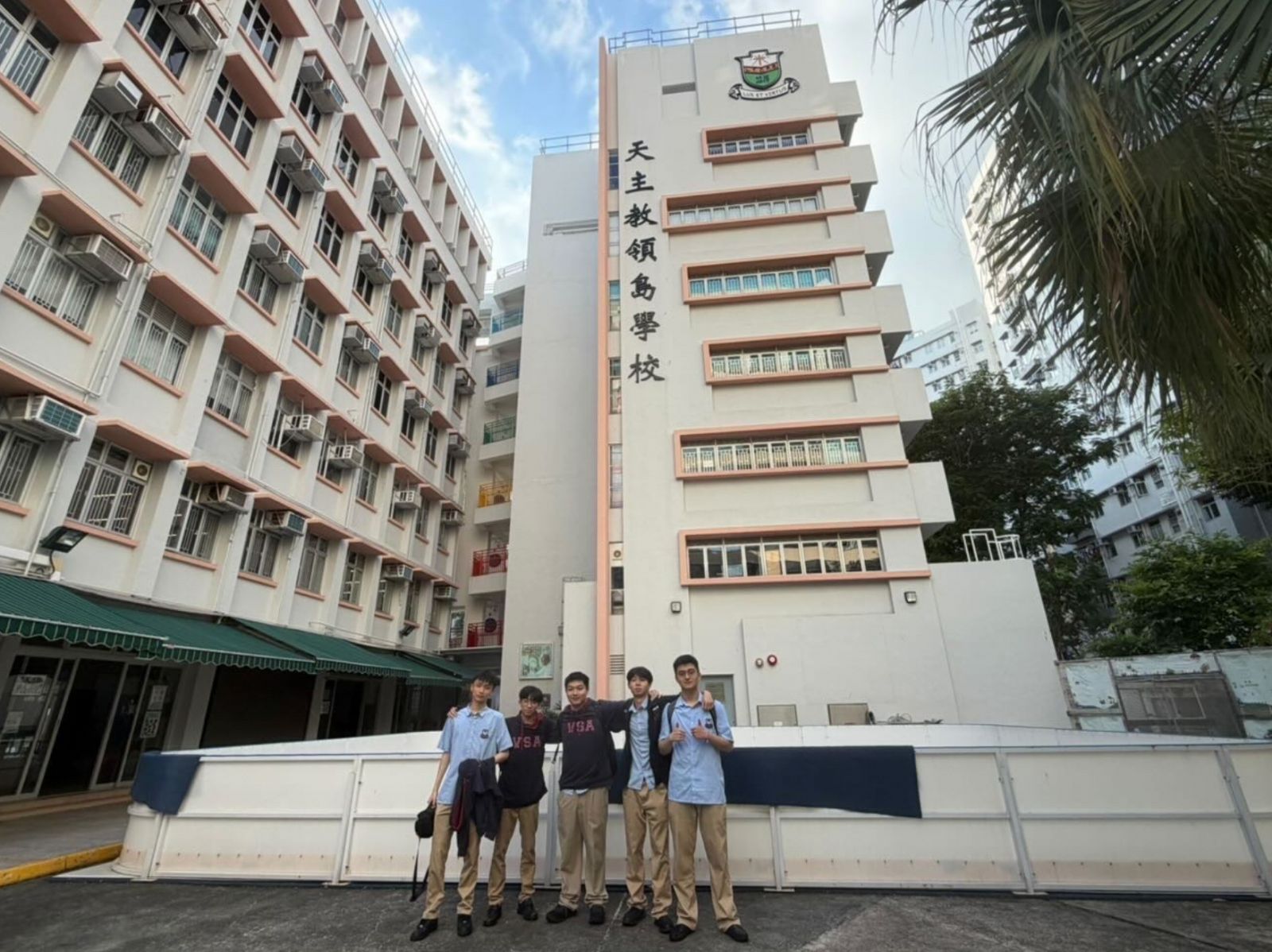
We teach with Ho Man Tin Ling To Catholic School, St. Barnabas' Home & Society, Kennedy Town School and 10% Organisation.
What's next
- PolicyWe're working on our submission to the First Five-Year Plan for Economic and Social Development (2026–2030), about how AI and economic policy can open up opportunities rather than narrow them.
- TeachingWe're going back to Ho Man Tin Ling To Catholic School next year with all four modules and a new group of tutors.
Get involved
Schools and organisations: if you work with children from underprivileged families and could use tutors, we'll bring the lessons, the tutors and the equipment. Get in touch.
Students: we're recruiting at Victoria Shanghai Academy. If you're into policy, economics or AI, we care more about what you want to do than about titles. Tell us what you'd like to work on.